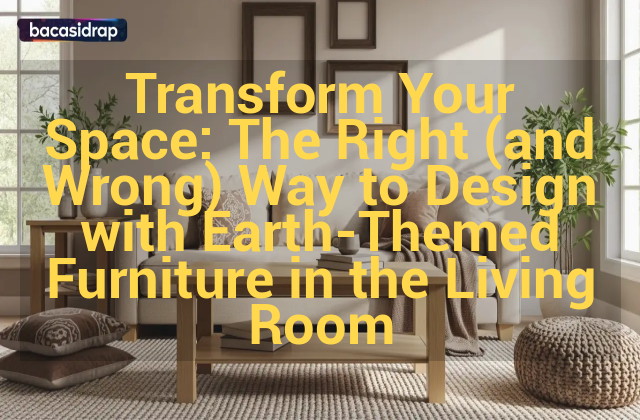
Ever dreamed of a living room that feels like a tranquil forest glade, a sun-drenched desert canyon, or a serene ocean retreat? Many of us yearn for a connection to nature within our homes, seeking solace from the concrete jungle outside. The allure of Earth-themed furniture in the living room is undeniable, promising a sanctuary of calm and natural beauty. But here’s the rub: turning that dream into a harmonious reality isn’t always as straightforward as it seems. Just like a beautiful landscape can be marred by an out-of-place structure, a living room can quickly lose its natural charm if not approached with thoughtful design. Let me tell you a tale of two homeowners, one who stumbled and one who soared, in their quest for an Earth-themed haven.
The Wrong Way: A Tale of Misguided Enthusiasm
Meet Mark. Mark loved the idea of bringing the outdoors in. He pictured himself relaxing amidst organic textures and earthy tones. His intention was pure, but his execution… well, it was a bit like trying to put an entire forest into a single pot. Mark’s journey to create an Earth-themed living room started with a burst of enthusiasm, but without a clear vision, it quickly spiraled into a chaotic display of literal interpretations.
He started by buying a sofa upholstered in a bright, almost neon, leaf-print fabric. “It’s green, like nature!” he reasoned. Next, a coffee table made from a single, unvarnished log slice, its rough edges shedding splinters if you brushed against it. For lighting, he chose lamps with bases shaped like gnarled tree branches, topped with shades that looked like dried grass. To complete the look, he scattered an abundance of artificial plants – plastic ferns, dusty silk flowers, and even a fake moss rug. His walls were painted a stark, unflattering brown. The result? Instead of a soothing natural retreat, Mark’s living room felt like a cluttered, slightly tacky theme park. It lacked warmth, cohesion, and, ironically, any genuine connection to nature.
Common Pitfalls in Earth-Themed Decor: What Went Wrong for Mark?
Mark’s experience highlights several common mistakes when attempting to integrate Earth-themed furniture in the living room:
- The “Theme Park” Effect: Over-literal interpretation of natural elements. Instead of being inspired by nature, everything became a direct, often artificial, imitation. Think leaf-shaped cushions, animal-print overload, or too many obviously fake rocks.
- Ignoring Authenticity: Relying heavily on artificial materials (plastic plants, synthetic fabrics mimicking natural textures) instead of genuine wood, stone, linen, or cotton. This instantly cheapens the look and feel.
- Inconsistent Color Palette: While nature is diverse, a living room needs a cohesive palette. Mark’s bright green sofa clashed with his harsh brown walls, creating visual discord rather than harmony.
- Lack of Textural Balance: Everything was either too rough (the splintery log table) or too smooth and artificial (the plastic plants). A truly natural space thrives on a varied interplay of textures.
- Sacrificing Functionality for Form: While the log table might have looked “natural,” its impracticality made it a poor choice for everyday living.
- Poor Lighting Choices: Harsh, artificial lighting can undermine any attempt to create a natural, soothing ambiance.
Let’s summarize Mark’s missteps in a table:
| Element | The Wrong Way (Mark’s Choice) | Why It Fails to Achieve an Earth Theme |
|---|---|---|
| Sofa | Bright green, loud leaf-print polyester | Too literal and artificial; synthetic fabric lacks natural feel; overpowers the room. |
| Coffee Table | Rough, splintery, unsealed log slice | Impractical, uncomfortable, hard to clean; lacks refined organic design. |
| Lighting | Lamps shaped like gnarled branches with rough grass shades; harsh overhead light. | Tacky, overly theatrical; harsh lighting kills natural ambiance. |
| Accessories | Abundance of plastic plants, fake moss rug, painted river rocks. | Looks cheap and dusty; lacks authenticity and living energy. |
| Walls | Stark, unflattering brown paint. | Flat and lifeless; doesn’t evoke natural depth or light. |
| Overall Feel | Cluttered, disjointed, artificial, uninviting. | Feels like a forced theme rather than an organic extension of nature. |
Mark’s biggest lesson was that “Earth-themed” doesn’t mean bringing the entire earth indoors, but rather drawing inspiration from its essence – its colors, textures, and inherent tranquility.
The Right Way: Crafting a Sanctuary with Earth-Themed Furniture in the Living Room
Now, let’s talk about Sarah, Mark’s friend. Sarah also dreamed of a living room infused with nature’s calm, but she approached her design with a different philosophy: subtlety, authenticity, and harmony. Sarah understood that true Earth-themed furniture in the living room isn’t about replication, but rather evocation. It’s about creating a feeling, an atmosphere, that echoes the natural world.
Sarah began by considering the larger picture: the mood she wanted to create. She envisioned a space that felt grounding, serene, and effortlessly connected to the outdoors. Her process was less about specific items and more about principles.
Embracing Subtlety and Authenticity: Sarah’s Blueprint
Here’s how Sarah expertly wove the essence of nature into her living room:
- A Harmonious Color Palette: Instead of stark colors, Sarah chose a palette inspired by the subtle shifts of nature. Think the muted greens of moss, the warm browns of rich earth, the soft greys of river stones, and the gentle blues of a clear sky or calm water. She used these colors not just on walls but also in her choice of furniture upholstery and accent pieces. Her walls were a soft, calming sage green, providing a perfect backdrop for her Earth-themed furniture.
- Natural Materials as the Foundation: Sarah knew that authenticity was key. Her sofa was upholstered in a durable, textured linen in a comforting sand beige. Her accent chairs were crafted from beautiful, light-toned oak with woven rattan backs, adding both warmth and a delicate organic pattern. A substantial coffee table made from reclaimed wood, with a smooth, natural finish, became a grounding focal point, showcasing the inherent beauty of the timber grain.
- Organic Shapes and Forms: Sarah avoided sharp, angular lines where possible. Her choices leaned towards furniture with soft curves, rounded edges, and fluid silhouettes that mimic the gentle forms found in nature. A plump, comfortable armchair with a gentle recline invited relaxation, its form echoing the natural contours of the body.
- Rich Textural Interplay: This was where Sarah truly excelled. She layered textures to create depth and interest. A soft, chunky knit throw draped over the linen sofa, a hand-loomed jute rug underfoot providing a tactile contrast to the smooth wooden floor, ceramic vases with a slightly uneven, handmade finish, and woven baskets for storage. This variety engaged the senses and prevented the space from feeling flat.
- Thoughtful Integration of Greenery: Instead of plastic plants, Sarah chose a few carefully selected, easy-to-care-for live plants. A tall, elegant fiddle-leaf fig in a terracotta pot brought vertical interest and fresh life, while smaller succulents on a wooden shelf added subtle pops of green. These living elements contributed genuine vibrancy and clean air.
- Maximizing Natural Light and Thoughtful Artificial Lighting: Sarah kept her windows free from heavy coverings, allowing ample natural light to flood the room. For evening, she opted for lamps with natural material bases (ceramic, wood) and linen shades, emitting a warm, inviting glow that mimicked the soft light of dusk or dawn. Dimmers allowed her to control the ambiance perfectly.
- Sustainable and Mindful Choices: Where possible, Sarah prioritized furniture and decor made from sustainably sourced materials, supporting artisans who crafted pieces with integrity. This conscious approach deepened the connection to the “Earth” theme beyond mere aesthetics.
Sarah’s living room, while clearly Earth-themed, didn’t scream “nature.” Instead, it whispered serenity, inviting inhabitants to unwind in a space that felt deeply connected to the planet, without sacrificing sophistication or comfort. It was an enduring sanctuary.
Key Elements for Earth-Themed Furniture in the Living Room – The Right Way
Here’s a practical guide to the elements Sarah embraced:
| Element Category | Recommended Choices (The Right Way) | Why It Works for Earth-Themed Furniture in the Living Room |
|---|---|---|
| Color Palette | Muted greens (sage, olive, moss), warm browns (terracotta, cognac), soft blues (sky, deep ocean), sandy beiges, charcoal greys, creams. | Reflects the subtle, diverse hues found in nature; creates a calming, cohesive backdrop. |
| Primary Furniture Materials | Solid wood (oak, walnut, teak, reclaimed wood), rattan, wicker, bamboo, linen, organic cotton, wool, leather. | Authentic, durable, ages beautifully, provides warmth and texture; connects directly to natural resources. |
| Accent Furniture/Decor | Stone (marble, slate, river rock details), ceramic, terracotta, jute, sisal, seagrass, glass, metals with natural patina (bronze, brushed brass). | Adds varied textures and visual interest; grounds the space; provides artisanal touches. |
| Shapes & Forms | Organic curves, rounded edges, irregular shapes, hand-carved details, flowing lines. | Mimics natural contours, promotes a relaxed atmosphere, avoids harshness. |
| Lighting | Warm LED bulbs, natural material lamp shades (linen, woven bamboo), dimmable fixtures, maximizing natural light. | Creates a soft, inviting glow; mimics natural light cycles; enhances ambiance. |
| Textiles | Chunky knits, woven fabrics, raw silk, soft wool, organic cotton, linen, faux fur (used sparingly and tastefully). | Adds comfort, depth, and sensory appeal; crucial for layering and warmth. |
| Greenery | Live plants (fiddle-leaf fig, snake plant, monstera, succulents), dried botanicals. | Brings life, oxygen, and authentic natural beauty; improves air quality. |
Practical Steps to a Harmonious Earth-Themed Living Room
Inspired by Sarah’s success? Here’s a step-by-step guide to help you incorporate Earth-themed furniture in your living room, avoiding the pitfalls Mark encountered:
- Define Your Natural Inspiration: Before buying anything, think about which aspect of nature resonates most with you. Is it the muted greens and rich browns of a forest? The soft blues and sandy whites of a coastline? The warm reds and oranges of a desert landscape? This helps unify your choices.
- Curate Your Core Color Palette: Select 3-5 primary colors based on your chosen inspiration. One dominant neutral (like sand or stone grey), one or two accent colors (like moss green or terracotta), and perhaps a deeper grounding color (like a rich brown or deep blue). Stick to these.
- Invest in Foundation Pieces Wisely: Your sofa and main armchairs are key. Choose them in natural, durable fabrics (linen, cotton, wool) in your core neutral or a subtle earthy tone. Prioritize comfort and longevity. These should be timeless pieces that serve as a calm anchor for your Earth-themed furniture in the living room.
- Incorporate Varied Textures: This is paramount. Combine smooth wood with rough stone, soft wool with crisp linen, glossy ceramics with matte pottery, and woven rattan with sleek metal. This sensory diversity is what makes natural spaces feel rich and inviting.
- Choose Furniture with Organic Forms: Look for pieces with gentle curves, ergonomic designs, and natural shapes. A round coffee table, an armchair with soft, enveloping lines, or shelving units made from naturally bent wood branches can add immense character.
- Accessorize Thoughtfully and Authentically:
- Live Plants: Always choose real plants over artificial ones. They clean the air and bring genuine life. Select planters made from natural materials like terracotta, ceramic, or woven baskets.
- Handmade Decor: Opt for hand-thrown pottery, carved wooden bowls, or artisanal woven wall hangings. These pieces have character and a story, unlike mass-produced plastic items.
- Natural Stone: A small stone sculpture, a set of coasters, or even a simple bowl of polished river stones can add an elegant, grounding touch.
- Mirrors: A mirror with a natural wood or rattan frame can amplify light and expand the sense of space.
- Maximize Natural Light: Keep window treatments light and airy – think sheer linen curtains or bamboo blinds that allow light to filter in. Position your Earth-themed furniture to take advantage of natural light sources.
- Layer Your Lighting: Beyond natural light, use a mix of ambient (overhead), task (reading lamps), and accent (spotlighting art) lighting. Choose fixtures with natural materials and warm-toned bulbs. Dimmers are your best friend for creating mood.
- Consider Sustainable and Ethical Sourcing: Whenever possible, choose furniture and decor made from sustainably harvested woods, recycled materials, or by artisans who uphold fair labor practices. This deepens your connection to the Earth theme.
- Personalize with Nature-Inspired Art: Hang art that depicts landscapes, botanicals, abstract natural patterns, or even photography of forests or oceans. Frame them in natural wood to maintain consistency.
Ensuring Longevity and Sustainability
Choosing Earth-themed furniture in the living room often means investing in quality, natural materials. To ensure these pieces last and remain beautiful, proper care is essential. Regular dusting of wooden surfaces, gentle cleaning of fabric upholstery according to manufacturer instructions, and mindful placement away from direct sunlight (which can fade natural dyes or warp wood) will extend their life. Embrace the natural aging of materials like wood and leather – their patina tells a story. When it’s time to replace or upgrade, consider donating, recycling, or repurposing old pieces to further your commitment to an Earth-friendly lifestyle.
Frequently Asked Questions about Earth-Themed Furniture in the Living Room
- What exactly constitutes ‘Earth-themed furniture’?
- Earth-themed furniture refers to pieces inspired by nature’s elements, colors, and textures. It typically involves natural materials like wood, stone, rattan, bamboo, linen, and cotton, in a palette of greens, browns, blues, greys, and sand tones. The emphasis is on organic shapes, authenticity, and creating a serene, natural ambiance rather than a literal depiction of nature.
- Can I mix different natural themes, like desert and forest, in my living room?
- Yes, but with caution and a unifying element. The key is to find common ground in color, texture, or form. For instance, a desert theme might use warm terracotta and sandy tones with rough textures, while a forest theme uses deep greens and rich browns with varied woods. You can blend them by using a neutral base color that works for both (like a soft cream or grey) and then introducing elements from each, ensuring they complement rather than clash. Focus on common natural materials (wood, stone) and a cohesive overall feeling.
- How do I incorporate color without losing the “earthy” feel?
- Stick to nature-inspired colors. Think the muted hues of a sunset (soft oranges, dusty roses), the vibrant but natural blues of tropical waters, or the subtle purples of heather. Use these colors as accents – in cushions, throws, or a single piece of artwork – against a more neutral, earthy backdrop. Avoid neon or overly artificial colors, and lean towards desaturated, natural tones.
- Are faux plants ever acceptable in an Earth-themed living room?
- While real plants are always preferred for their authenticity and air-purifying qualities, high-quality faux plants can be used sparingly if you have challenging conditions (e.g., very low light, allergies, frequent travel). The emphasis is on “high-quality” – they should look incredibly realistic and be well-maintained (dust-free). Avoid an abundance of clearly artificial, plastic-looking plants, as these will detract from the natural aesthetic.
- How can I make my Earth-themed living room feel modern, not overly rustic?
- To achieve a modern Earth-themed look, focus on clean lines, minimalist design, and sophisticated integration of natural elements. Choose furniture with sleek, understated profiles but made from beautiful woods or natural fabrics. Pair natural textures (e.g., a jute rug) with contemporary art or lighting. Incorporate elements like polished concrete, metal accents (brushed brass), and glass alongside your wood and stone. The key is balance: blend the warmth of nature with the simplicity of modern design.
- What’s the best way to incorporate lighting for an Earth theme?
- The best lighting mimics natural light. Maximize daylight with sheer curtains or no coverings. For artificial light, use warm-toned LED bulbs (around 2700K-3000K) and layer your lighting with various sources: a central ambient light, task lighting (e.g., reading lamps), and accent lighting (e.g., to highlight art or plants). Choose fixtures made from natural materials like wood, ceramic, or woven fibers, with soft, diffused light output. Dimmers are crucial for adjusting the mood and creating a cozy, natural ambiance.
- How important is texture in creating an Earth-themed space?
- Texture is incredibly important – arguably as important as color! Nature is rich in texture, from smooth river stones to rough tree bark, soft moss to jagged cliffs. Replicating this diversity through different materials (soft linen, coarse jute, smooth wood, uneven ceramic, chunky knit wool) adds depth, visual interest, and sensory appeal. A variety of textures prevents the room from feeling flat and artificial, creating a more immersive and comfortable experience.
Your Sanctuary Awaits: Embrace the Earth in Your Living Room
The journey to create an Earth-themed living room is one of discovery and thoughtful design. It’s about understanding that true connection to nature isn’t found in superficial imitation, but in a deeper appreciation for authentic materials, harmonious colors, and organic forms. By learning from the “wrong way” and embracing the principles of the “right way,” you can transform your living room from a mere space into a genuine sanctuary. A place where every piece of Earth-themed furniture whispers tales of ancient forests, serene coastlines, and sun-kissed plains, inviting you to relax, recharge, and reconnect.
Are you ready to transform your living room into a haven that reflects the timeless beauty of the natural world? Start by looking around your home and identifying one small change you can make today. Perhaps it’s swapping out a synthetic throw for a natural wool one, adding a living plant, or simply reconsidering your color palette. Embrace the journey, trust your instincts, and let the Earth inspire your ultimate living space.
